
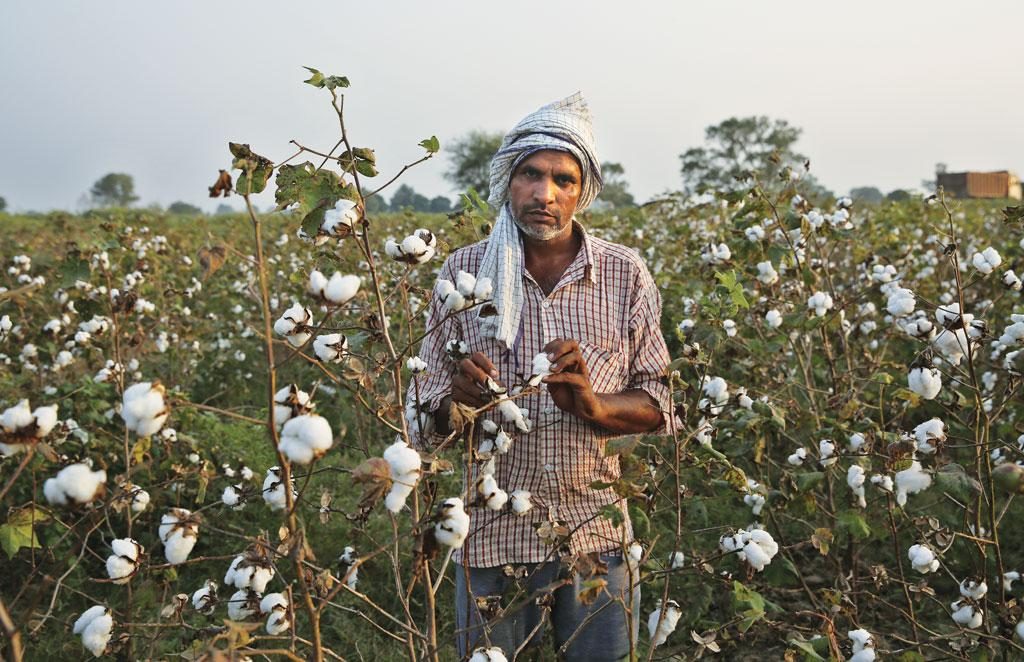
India has the largest area under cotton cultivation in the world and is the third largest producer after China and United States of America. India is producing all the four types of cultivated species of cotton. Cotton clothing are cool, classy, breathable, soft, comfortable, natural and much more. I am stressing on this fact because in market one can find variety of less expensive synthetic fibres but nothing is comparable to this fabric. Moreover due to the large production livlihood of many in India is dependent on the cotton farming. The earliest evidence for the use of cotton fibers in textiles is from the Mehrgarh and Rakhigarhi sites in India, which date to approximately 5000 BC. The Indus Valley Civilization, which spanned the Indian Subcontinent from 3300 to 1300 BC, was able to flourish due to cotton cultivation, which provided the people of this culture with readily available sources of clothing and other textiles. With the span of time, consumption of good quality cotton by domestic textile industry is growing at a faster pace and there is a need to motivate thecotton farmers in the Country to grow quality cotton to meet the growing demand of domestic textile Industry.
But looking at how the cotton is being cultivated posses a challenge it self. The largely water intensive nature of the cotton crop, extensive use of fertilisers and pesticides and genetic modification has posed a significant environmental challenge as far as cotton cultivation is concerned. In india product range includes a wide range of cotton hand block printed fabric, jaipuri cotton printed fabric, printed cotton fabric, paisley printed fabrics, sanganeri printed fabric and cotton hand printed fabric. Both acid and basic dyes play an important role in cotton printing, which for the most part is confined to the production of articles for fashion goods, handkerchiefs, and scarves, all articles for which bright colours are in demand. Alizarine and other mordant colours are mainly used for any goods that have to resist repeated washings or prolonged exposure to light. In this case the cotton frequently must be prepared in alizarine oil, after which it is treated in all respects like any other fibre, steamed, washed and soaped, the colours used being the same.
 mimesis