
Native to Gujrat and punjab it shares great traditional heritage to northern india. The technique of patola uses ikat- tie dye dyeing and traditional style of weaving. It is believed to be originated in the 5th century . And metamorphosed into a highly refined industry of the 11th century, the period when it became the symbol of fashion among the elite.
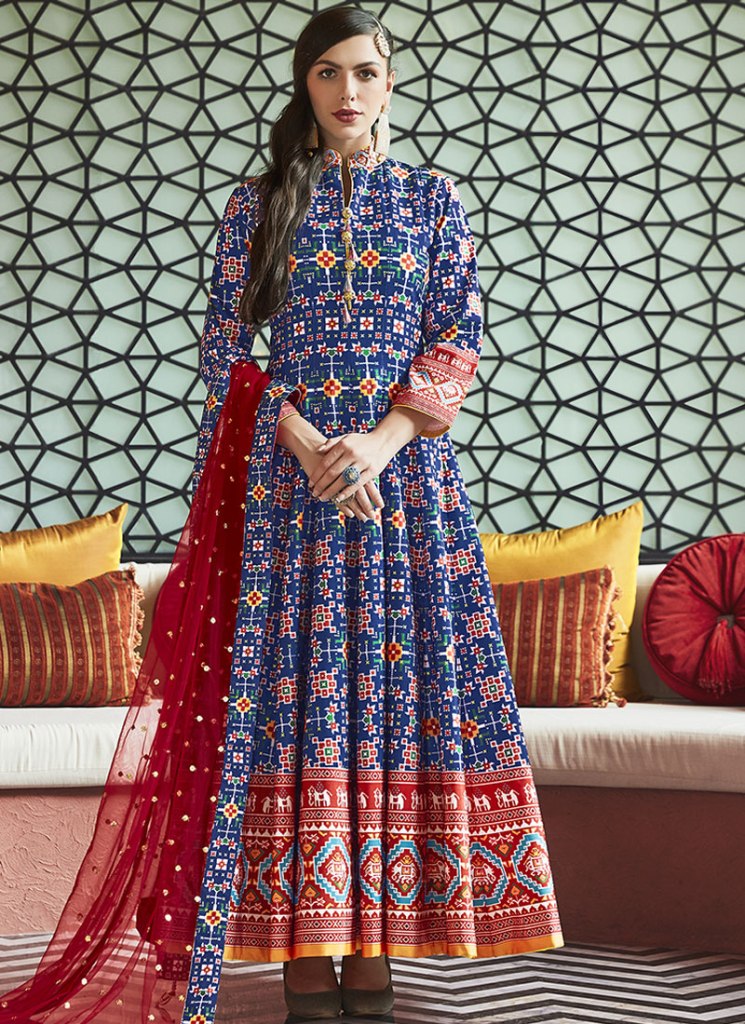
Patola prints are woven using dyed threads both vertically (warp) and horizontally (weft) to create the design. The strings are dyed according to a pattern, and the dye marks align when woven, forming the pattern on the cloth. Patola silk is considered to be among the best hand-woven silk in India. Patola prints can be vertically-resist dyed, called single ikat. Or, they may be horizontally-resist dyed, called double ikat. Ptola prints share great story with patan, a city in Gujrat. Rulers of the area had gone through big troubles to create their class defining cloths. It is presumed that more than 700 silk weavers from Maharashtra and Gujrat came to patan and fabricated the precious patola prints which took them more than two years to perfect it. It is believed that the technique and fabric became famous after the empire in Gujrat wall failing as the rulers tried their best to keep it’s process secret to maintain their distict luxurious lifestyle. Nowdays Platola prints comparatively takes lesser time to be weaved but still requires intricate precision and skill. Till date it is seen as class defining fabric and still costs high.
 mimesis